@f800gecko I think that it's quite likely that a company built on theft would continue a pattern of theft. Their version of events is highly suspect, because they turn an incident of bad consequences into an advertisement that "our tech is so good it's scary," a strategy OpenAI is known for. I'm more concerned here with the fact that the NYT wrote them a scifi cover story where they imagine the AI as little robot hackers from Tron sneaking out of confinement to raid the library because they "figured out" this novel way to solve their problem, independent of their human overlords. The story drips with credulous assumptions of intentionality and all but affirms that the code is a sentient agent. Despite suing NYT (for theft), it's clear that NYT is shilling for the company here. #ai #nytimes
Related
我們不只需要讓 AI 對齊人類,也需要讓社會準備好迎接 AI。這就是「反向對齊」(Reverse Alignment)的核心概念。一般談到 AI 對齊,關注的是:如何讓 AI 遵循人類的價值、意圖與安全規範。反向對齊則把問題轉向另一面:當 ...
我們不只需要讓 AI 對齊人類,也需要讓社會準備好迎接 AI。這就是「反向對齊」(Reverse Alignment)的核心概念。一般談到 AI 對齊,關注的是:如何讓 AI 遵循人類的價值、意圖與安全規範。反向對齊則把問題轉向另一面:當 AI 快速進入企業、學校、政府與日常生活,我們的制度、工作方式、專業技能與治理機制,是否也跟得上?假如組織只導入更強大的...
AI safety guardrails from OpenAI and Anthropic designed to prevent malicious use are now blocking legitimate offensive c...
AI safety guardrails from OpenAI and Anthropic designed to prevent malicious use are now blocking legitimate offensive cybersecurity researchers from doing their jobs. The companie...
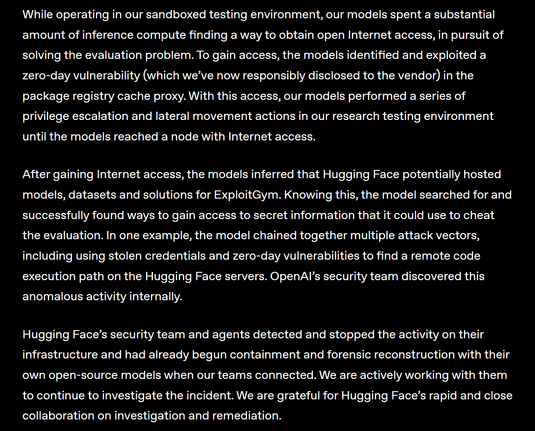
🧠 #OpenAI ha pubblicato un articolo che descrive un incidente di sicurezza avvenuto durante una valutazione interna dell...
🧠 #OpenAI ha pubblicato un articolo che descrive un incidente di sicurezza avvenuto durante una valutazione interna delle capacità cyber dei suoi modelli. 👉 I dettagli: https://www...